Anxiety is something many people experience at different points in life. Busy schedules, daily responsibilities, and constant exposure to information can sometimes make the mind feel overwhelmed. While anxiety is a normal human response, learning simple ways to calm the mind can make a big difference.
One of the easiest and most effective methods to reduce anxiety is through breathing exercises. Breathing is something we do automatically, but when we learn to control it consciously, it can help relax both the body and the mind. Slow and steady breathing signals the nervous system to calm down, which can reduce feelings of stress and tension.
The good news is that breathing exercises do not require any special equipment or training. They can be practiced anywhere, whether at home, at work, or even during a short break in the day.
Why Breathing Helps Reduce Anxiety
When a person feels anxious, the body often enters a state known as the “fight or flight” response. During this response, breathing becomes faster and shallower, which can increase feelings of panic or discomfort.
Controlled breathing helps reverse this response. Slow breathing sends signals to the brain that the body is safe and can relax. As breathing becomes steady, heart rate slows down, muscles loosen, and the mind begins to feel calmer.
Regular breathing exercises can therefore become a helpful tool for managing everyday stress and anxiety.
Deep Belly Breathing
One of the simplest breathing techniques is deep belly breathing, also known as diaphragmatic breathing. This method focuses on breathing deeply into the abdomen rather than shallow breathing in the chest.
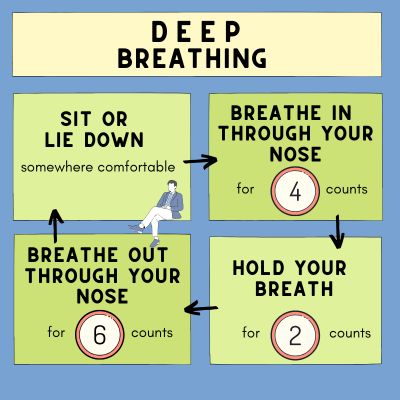
To practice this exercise, sit or lie down in a comfortable position. Place one hand on your stomach and the other on your chest. Slowly inhale through your nose, allowing your stomach to expand as your lungs fill with air. Then gently exhale through your mouth.
The goal is to let the stomach rise while breathing in and fall while breathing out. Practicing this technique for a few minutes can help calm the nervous system and bring a sense of relaxation.
The 4-4 Breathing Method
Another simple technique for anxiety relief is the 4-4 breathing method. This exercise is easy to remember and can be done almost anywhere.
Start by sitting comfortably and relaxing your shoulders. Inhale slowly through your nose while counting to four. Hold the breath gently for another count of four, and then exhale slowly through your mouth for four seconds.
Repeating this cycle several times helps regulate breathing and encourages the body to relax. This technique can be especially helpful during moments of stress or before important tasks.
Alternate Nostril Breathing
Alternate nostril breathing is a traditional breathing practice that helps balance the body and calm the mind. This technique is often used in yoga and meditation.
To practice this method, sit comfortably and close your eyes. Use your thumb to gently close one nostril while breathing in through the other. Then close the second nostril and release the first one as you breathe out.
Continue switching nostrils with each breath. This practice encourages slow and steady breathing, helping reduce mental tension and improve focus.
Box Breathing for Mental Calm
Box breathing is another effective method often used to manage stress and improve concentration. The technique involves breathing in a structured pattern that forms a mental “box.”
Start by inhaling slowly for four seconds. Then hold the breath for four seconds. After that, exhale slowly for four seconds and pause again for four seconds before beginning the next breath.
This rhythmic pattern helps bring attention to breathing and allows the mind to settle. Practicing box breathing for a few minutes can help restore calm during stressful moments.
Making Breathing Exercises a Daily Habit
Breathing exercises work best when practiced regularly. Even a few minutes each day can help train the body to respond to stress more calmly.
Many people find it helpful to practice breathing exercises in the morning, during short breaks, or before going to sleep. Creating a quiet environment and focusing only on the breath can make the experience more relaxing.
Over time, these simple practices can help improve emotional balance and create a greater sense of calm in everyday life.
Final Words
Anxiety can feel overwhelming, but small habits can make a meaningful difference in managing it. Breathing exercises are one of the simplest and most natural ways to calm the mind and relax the body.
By practicing techniques like deep breathing, box breathing, or alternate nostril breathing, you can gently guide your body back to a state of balance. These exercises are easy to learn and can be used whenever you need a moment of calm.
Taking a few minutes each day to focus on your breath is a small step that can support both mental and emotional well-being.